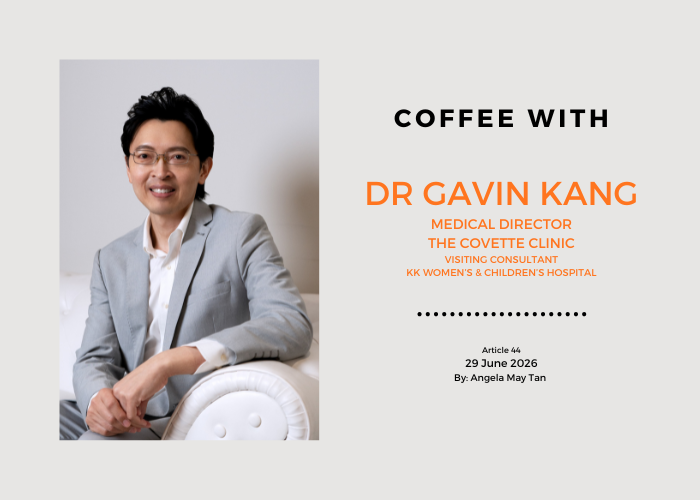
From repairing cleft lips in children to helping patients regain confidence through reconstructive and aesthetic procedures, 40-year-old Dr Gavin Kang‘s career has been shaped by compassion, precision and artistry. Among a select group of surgeons in Singapore fully trained in both paediatric and adult plastic surgery, he has dedicated his career to restoring both function and confidence across every stage of life. In this edition of Coffee With, SG Lifestyle Features Writer Angela May Tan speaks with Dr Kang, Medical Director at The Covette Clinic and Visiting Consultant at KK Women’s & Children’s Hospital, about his journey into medicine, the rewards of patient care and the philosophy that continues to guide his practice.
SGLS: What inspired you to pursue a career in medicine?
GK: My interest in medicine developed quite early in life. Growing up, I frequently visited our family doctor because I suffered from recurrent coughs and respiratory issues. Those visits gave me a firsthand appreciation of the trust that patients place in their doctors and the reassurance that a caring physician can provide, especially when someone is unwell.
As a teenager, I also underwent two minor surgical procedures under the care of different surgeons. While the operations themselves were relatively straightforward, what left a lasting impression on me was the professionalism, skill and compassion demonstrated by the doctors who looked after me.
Those early encounters inspired me to pursue a career in medicine. I was drawn to the idea of helping others in a meaningful way, and over time, that interest evolved into a passion for surgery, where I could combine technical skill, problem-solving and patient care to make a tangible difference in people’s lives.
SGLS: Why plastic surgery?
GK: What drew me to plastic surgery was its unique combination of science, technical expertise and artistry. Like all surgical disciplines, it requires a strong foundation in medical knowledge, meticulous planning and precise surgical skills. However, plastic surgery goes a step further by demanding an artistic eye and an appreciation for form, proportion, symmetry and aesthetics.
Every patient presents a different challenge. Whether reconstructing a congenital condition, repairing trauma or performing cosmetic procedures, the surgeon must think carefully about how tissues heal, how scars mature and how the final result will look months or even years later.
I find this blend of therapeutic surgery and artistic judgement particularly rewarding. While there are often clear medical principles that guide treatment, there is also an element of creativity involved in tailoring solutions to each individual patient. No two cases are exactly alike, which keeps the speciality intellectually stimulating and professionally fulfilling.
Being able to combine surgical precision with artistic sensibility to achieve these outcomes is what attracted me to the discipline and continues to inspire me today.
SGLS: What inspired your focus in paediatric plastic surgery? Any memorable patient stories?
GK: Paediatric plastic surgery appealed to me because it offered the opportunity to make a meaningful difference at a very early stage of a child’s life. Many of the conditions we treat are congenital or developmental, and timely intervention can have a lifelong impact on a child’s function, appearance, confidence and overall wellbeing.
What motivated me most was the knowledge that a successful operation could potentially change the trajectory of a young person’s life. Whether it involves correcting a cleft lip, reconstructing a congenital deformity or addressing an injury, the outcomes often extend far beyond the operating theatre. The improvements can affect how a child eats, speaks, interacts with others and sees themselves as they grow up.
As for memorable cases, it is difficult to single out just one. Very few things are as rewarding as seeing a child recover well after surgery and witnessing the relief and happiness on their parents’ faces. Parents place an immense amount of trust in us, often during one of the most stressful periods of their lives. Being able to alleviate their worries and give their child the best possible start in life is a privilege.
While the medical conditions may differ, what stays with me is the joy of seeing a child thrive and a family regain hope and confidence in the future. Those moments are what have made this area of medicine so meaningful throughout my career.
SGLS: What’s your favourite procedure?
GK: Cleft lip surgical repair remains one of the most rewarding procedures I perform. While many surgeries can improve appearance, cleft lip repair has a profound impact on both function and quality of life. For a child born with a cleft lip, the condition can affect feeding, speech development and social interactions as they grow.
Being able to restore a more normal lip structure helps the child feed more effectively, supports proper speech development and allows them to grow up with greater confidence. The transformation can be remarkable, not only physically but also emotionally.
What makes the procedure especially meaningful is seeing the relief and gratitude on the faces of parents. Knowing that a few hours in the operating theatre can make such a significant difference to a child’s life and a family’s peace of mind is incredibly fulfilling and reminds me why I chose this profession in the first place.
SGLS: How do you balance patient expectations with what is medically appropriate and ethical?
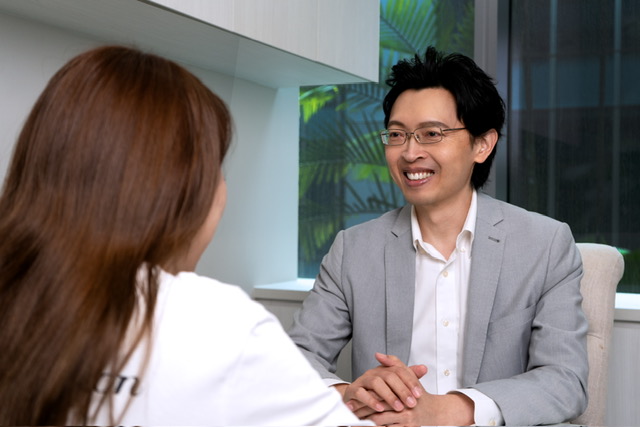
GK: I try to start by understanding what the patient is really hoping to achieve. Often, it is not just about looking younger or changing a particular feature, but about feeling more confident and comfortable in their own skin. Taking the time to listen and empathise helps me understand their concerns and motivations.
My role is then to guide them towards options that are medically appropriate, safe and likely to deliver natural-looking results.
I believe aesthetic medicine should enhance a person’s existing features and physique rather than completely change who they are. Managing expectations is therefore an important part of the consultation process. I am always honest about what can realistically be achieved, how long results may take to appear and the potential limitations of any treatment.
Ultimately, my goal is to meet patient expectations within the boundaries of what is medically safe and aesthetically balanced.
SGLS: Outside of the clinic, how do you recharge?
GK: I run four to five times a week. It is a sport that I can do at any time of the day, making it easy to fit into my schedule. It helps me recharge and gives me the mental space to reflect on how I can do better for my patients.
There is something almost meditative about settling into a steady rhythm and focusing on each stride and breath. Running allows me to clear my mind, process challenges and return to work with renewed focus, energy and perspective.
Ultimately, that time spent in motion helps me become a better surgeon because it reminds me to approach each patient with fresh eyes, empathy and a commitment to continuous improvement.
===
Interview by Angela May Tan, Features Writer, SG Lifestyle.
Contact us at hello@sglifestyle.sg