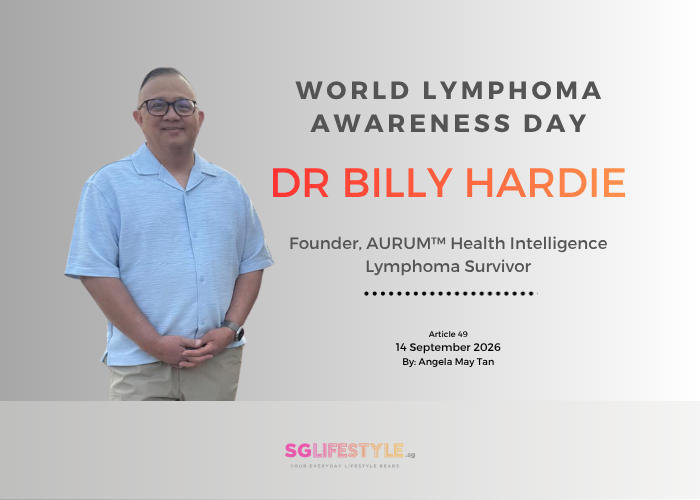
In August 2023, 62-year-old Dr Billy Hardie feared he had only a year to live. After treating patients for more than 35 years, the Singaporean doctor and Founder of the AURUM™ Health Intelligence platform suddenly became one himself.
To mark World Lymphoma Awareness Day 2026 on 15 September and raise awareness of lymphoma and its warning signs, Dr Hardie shares with SG Lifestyle Features Writer Angela May Tan his journey through lymphoma, remission and a new perspective on healthy ageing.
SGLS: What was it like suddenly finding yourself on the other side after being diagnosed with lymphoma?
Dr Hardie: The diagnosis came as a profound shock. In August 2023, I feared I had only a year left to live.
For more than three decades, I was the doctor ordering scans and interpreting results. Suddenly, I was the patient waiting anxiously for answers. It made me realise how powerless waiting can make you feel.
Doctors live in clinic time; patients live in waiting time. I never fully understood that until I became one.
Being a doctor gave me one advantage: I could understand my biomarkers, scans and what they meant for my next steps.
SGLS: What warning signs did you overlook before your diagnosis?
Dr Hardie: It began with severe back pain, which I initially attributed to moving some boxes. Over the following weeks, I developed persistent abdominal pain and was eventually diagnosed with acute appendicitis. Ironically, it was the CT scan for my appendicitis that revealed an abnormality near my heart.
After several months of monitoring and further investigation, a biopsy confirmed follicular lymphoma that had transformed into diffuse large B-cell lymphoma. I subsequently underwent seven rounds of intravenous chemotherapy, followed by two years of antibody treatment.
The irony isn’t lost on me. Today, I live by the principle that data you don’t look at can’t help you — yet my own diagnosis began with warning signs I didn’t investigate further.
SGLS: How did cancer change you personally and as a doctor?
Dr Hardie: Personally, it rearranged my priorities. Things I once thought were urgent turned out to be merely loud. Time with family, loved ones and for myself became far more precious.
Professionally, I communicate differently. I share results with patients as soon as possible because I now understand the anxiety of waiting. I also help them understand how their health data changes over time, because understanding my own gave me a sense of control.
In many ways, I also became my own patient. Throughout treatment and recovery, I tracked my blood markers, body composition, sleep and strength. Watching these decline and gradually recover showed me how closely health data can reflect what is happening within the body. That experience became the foundation of everything I’ve built since.

SGLS: What do you wish more people understood about lymphoma?
Dr Hardie: First, don’t ignore persistent pain or lumps. Lymphoma can present as a painless swelling in the neck, armpit or groin, which people may overlook because it doesn’t hurt. If a lump persists or grows, see a doctor.
Second, pay attention when symptoms occur together, such as night sweats, unexplained fever or weight loss, persistent fatigue and back pain. Individually, they may have many causes, but when they persist together, they warrant medical investigation.
Finally, lymphoma is one of the more treatable cancers. I’m sitting here in complete remission as evidence of that. Treatments and outcomes have improved tremendously, and early detection can make a difference.
Don’t let fear of the answer stop you from asking the question.
SGLS: How can AI help us manage our health as we age?
Dr Hardie: The biggest flaw in healthcare today is that we rely on snapshots. One blood test a year tells us where we are, but not where we’re heading. Disease develops gradually, and my own biomarkers were changing long before they crossed an abnormal threshold.
That’s why I believe the future of healthy ageing lies in tracking health over time. By combining blood tests, wearable tech, sleep and physical strength, AI can identify patterns much earlier than any single consultation.
But AI should never replace doctors. It should give clinicians better insights and patients a clearer understanding of their own health—so we can detect disease earlier, intervene sooner and help people enjoy healthier, longer lives.
SGLS: Has surviving lymphoma changed your perspective on healthy ageing?
Dr Hardie: Healthy ageing isn’t simply about adding years to life; it’s about living those years well. Cancer made that very personal. During chemotherapy, you don’t dream about living longer — you dream about ordinary days when you feel strong and well again.
For me, healthy ageing means remaining physically strong, mentally sharp and independent for as long as possible. It’s built on small, consistent habits — regular exercise, strength training, adequate sleep and monitoring your health.
My cancer journey began as a frightening experience but ultimately became a gift. I was surrounded by compassion, encouragement and care, and it changed how I view longevity and life itself.
I’m turning 62 this September and am now in remission. In many ways, I feel stronger than before my diagnosis — mentally, emotionally and spiritually. I see my recovery as a gift built on faith, love, grace and knowledge, and one whose lessons I hope to continue sharing with the people around me.
===
Interview by Angela May Tan, Features Editor & Writer.